Wearing Protocols: Jewelry Settings & Energy Titration
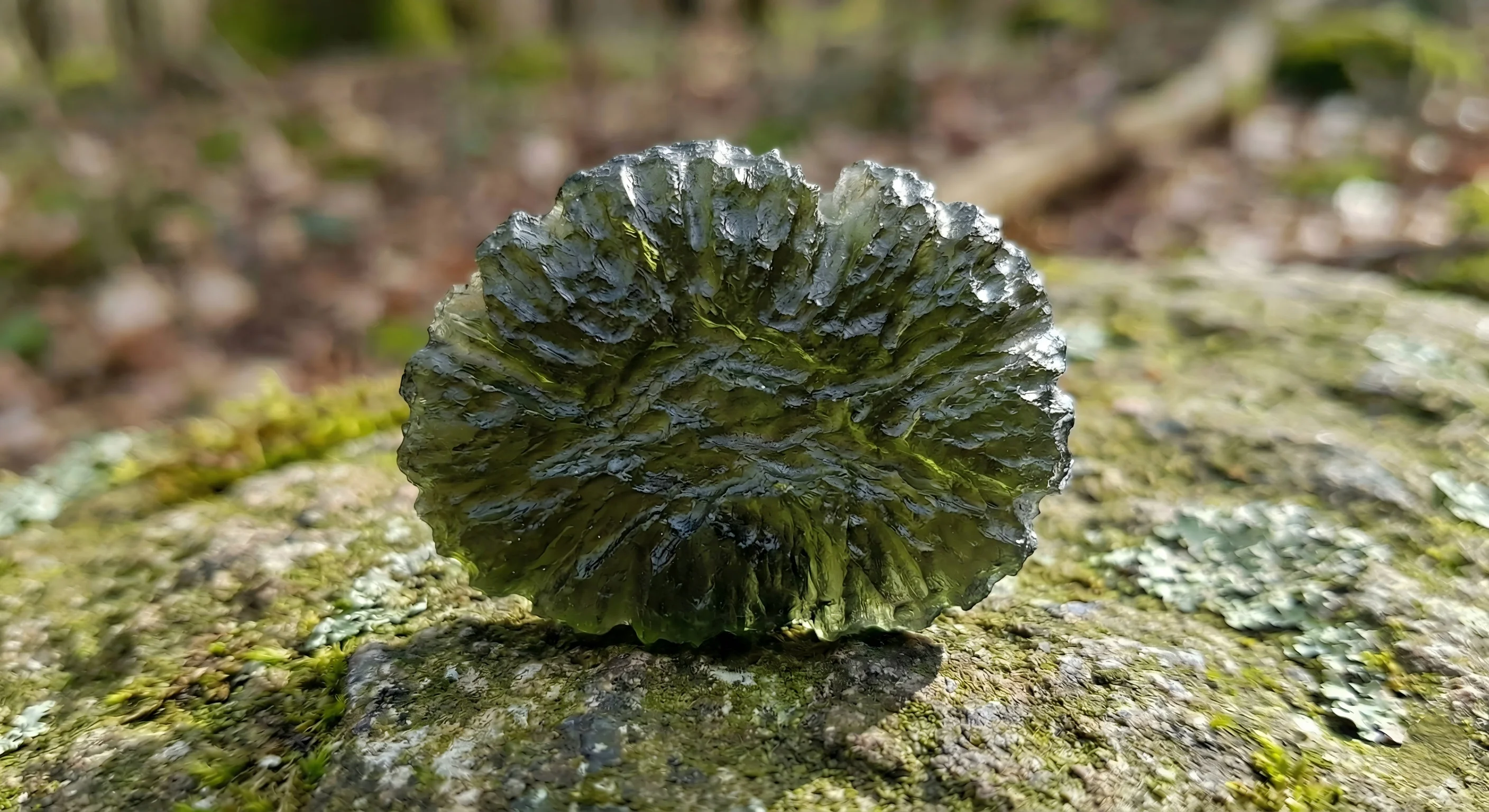
I remember my first encounter with raw Moldavite. Within twenty minutes, a bizarre, localized heat bloomed in my chest. My pulse quickened. The sheer physical density of the vibration forced me to take the pendant off. That initial friction taught me a crucial lesson: you don't just wear high-frequency tektites. You negotiate with them.
The intersection of intentional adornment and somatic awareness has fundamentally shifted. We no longer accept haphazard wire-wraps or blind daily wear. Designing your energetic alignment requires calculated decisions regarding structural integrity, metallurgical conductivity, and physical placement. Whether you are calibrating a sterling silver buffer or leaning into the aggressive amplification of 18k solid gold, this blueprint outlines the physical realities of continuous tektite integration. Stop ignoring the physical weight of your jewelry. Start architecting your sensory environment.
Mastering the Frequency: The Structural Reality
The core tenet of 2026: Flimsy settings destroy both the stone and the intention.
The aesthetic landscape has aggressively pivoted away from delicate, minimal mounts. We are witnessing a strict return to heavy, structural bezel settings. Thick, recycled metals act as necessary physical armor for fragile tektites while serving as a grounding anchor for the wearer. A 10-gram piece of raw glass suspended by a 1mm silver wire isn't just an aesthetic compromise; it is an imminent structural failure.
Furthermore, as traditional gem markets contract, high-vibration tektites are dominating alternative commitment rings. However, wearing these potent environmental disruptors continuously demands a strict observational protocol. It requires verifying the ethical sourcing of the material to ensure the physical object hasn't absorbed the heavy, stagnant frequencies of exploitative supply chains.
The Somatic Anchor
From an observational perspective, heavy jewelry acts as a continuous tactile reminder. When a ring carries significant physical mass and a high vibrational signature, it demands your nervous system's attention. The weight pulling against your finger or the cold metal resting on your collarbone pulls your wandering mind back to the present physical moment. Our integration protocols focus on pacing this adaptation, preventing sensory exhaustion while expanding your baseline capacity for focus.
✦ Veteran Insight: The Ugly Truth About Structural Settings ▾
Let’s address the elephant in the room. The industry romanticizes "raw, natural" jewelry, but the physical reality of wearing untreated extraterrestrial glass is deeply frustrating. Tektites rate remarkably low on the Mohs hardness scale—typically around 5.5. If you mount a protruding raw shard on a ring, you will inevitably smash it against a car door or a keyboard. I have seen countless individuals lose substantial investments because they chose a delicate prong setting for a stone that demands a protective fortress.
The Trade-off of 18k Gold vs. Sterling Silver: Gold is heavy, expensive, and behaves as an aggressive energetic conductor. When I switched my daily pendant from silver to solid 18k gold, the localized heat on my sternum intensified significantly. Gold does not buffer; it accelerates. However, 18k gold is also relatively soft. It will accumulate microscopic scratches over time, developing a duller patina unless routinely polished.
Silver, conversely, is the ideal energetic dampener. It cools the aggressive, chaotic output of raw tektites. But silver comes with a brutal maintenance cost. It oxidizes rapidly when exposed to the highly acidic sweat that often accompanies intense energetic integration. You will find yourself constantly battling tarnish, scrubbing the dark crevices of your bezel setting with a polishing cloth. Choose your compromise: the aggressive, scratch-prone acceleration of gold, or the cooling, high-maintenance buffering of silver. There is no perfect option.
The Configuration Matrix: Cut & Metal
Stop guessing your energetic capacity. The physical morphology of the stone (raw vs. faceted) colliding with your chosen metallurgy dictates the exact resonance you will endure. Configure your setup below to understand the physical and sensory trade-offs of your jewelry architecture.
1. Select Morphology
2. Select Metallurgy
The Lunar Buffer
Wild Frequency, Dampened Conductivity
The untamed physical structure of a raw tektite scatters resonance in a chaotic, multi-directional pattern. By framing this wild structure in dense sterling silver, you introduce a necessary cooling mechanism. The silver physically absorbs and slows the electrochemical feedback against the skin. I highly recommend this as the baseline configuration for anyone sensitive to sudden environmental shifts or starting deep internal observation routines. Ensure the setting has an open back so the stone physically touches the skin, grounding the circuit.
Dominant Trait: High Maintenance, Low Overwhelm✦ Reality Check: The Annoyance of Morphology ▾
I frequently consult with clients who insist on buying the most jagged, aggressive-looking raw stones because they believe "raw means powerful." I have to brutally correct them. Yes, the untouched morphology carries a unique, wild atmospheric quality. But practically? You will rip your sweaters. You will inadvertently scratch your partner's arm. You will trap dust, skin cells, and lotion inside the microscopic pits of the stone, turning a beautiful piece of cosmic glass into a dull, unhygienic liability.
If you choose raw, you must accept the physical friction it introduces into your daily tactile experience. It demands vigilance.
Faceted stones, on the other hand, surrender their primal aesthetic for seamless integration. A brilliant cut tektite slides easily under a cuff. It wipes clean with a microfiber cloth in three seconds. However, the trade-off is visceral: faceted stones often look suspiciously similar to cheap, manufactured bottle glass. You sacrifice the undeniably alien texture of the stone for the convenience of modern wearability. Stop prioritizing fantasy over daily function. If you work with your hands, abandon the raw shards and buy a flush-mounted, faceted cabochon.
Somatic Integration: The Titration Protocol
Do not endure the discomfort. Immediate, prolonged exposure to high-resonance jewelry frequently triggers a localized sensory flush—a distinct heat radiating across the collarbone or up the arm, accompanied by a feeling of mild disorientation. The chart below models the Micro-Dosing integration scale to prevent sensory burnout.
✦ Protocol Calibrator
Adjust your baseline somatic sensitivity to map an accurate 30-day exposure timeline.
Visualizing The Somatic Flush
Interact with the slider below. It maps the common progression of the "flush"—beginning as a localized warmth near the sternum and rapidly expanding across the upper respiratory and meridian pathways due to the sudden shift in sensory input. This physical expansion can feel alarming if you aren't expecting it.
✦ Veteran Insight: The Consequence of Rushing Integration ▾
I cannot emphasize this enough: ignoring the physical discomfort of a tektite flush is an act of bodily disrespect. People acquire a heavy piece, slap it on their chest, and refuse to take it off even as their heart rate spikes and a mild tension headache sets in. They assume the discomfort means it is "working." This is a profound misunderstanding of somatic regulation.
The flush is your nervous system interpreting a sudden, dense shift in the physical and electromagnetic environment. If you force the body to endure this without titration, you will crash. I once wore a 20-gram pendant for 12 hours straight on day one. By 8 PM, I was profoundly irritable, physically exhausted, and unable to string a coherent sentence together. My body had completely expended its reserves trying to process the continuous, high-amplitude stimulus.
The micro-dosing protocol (10 minutes a day initially) feels agonizingly slow to the eager mind, but it is physically necessary. Wear it until you notice the warmth. The second the warmth shifts into tension or mild anxiety, unfasten the clasp and put the stone in another room. You are building muscle memory for a specific environmental frequency. Treat it like heavy physical conditioning. Rest is where the actual integration happens.
The Anatomy of Placement
Proximity dictates output. Where the metal and stone physically contact your skin alters the somatic feedback loop. Click the distinct nodes on the hands below to review the specific protocols for navigating Yin (Receptive) and Yang (Projective) placement.
Left Hand Placements
Protocols for Introspection
Wearing a heavy cuff here provides a massive tactile anchor against the pulse point. The physical constraint around the wrist serves as a constant reminder to pull scattered focus inward. Excellent for navigating heavy, introspective periods where external noise is overwhelming.
Relational Focus
Traditionally tied to the vena amoris, placing a dense setting here creates a deliberate focal point for emotional awareness. The weight of the stone on this comparatively weak digit forces you to move the hand more consciously, physically interrupting habitual, careless gestures.
Centering the Core
The central axis of the hand. A large stone here restricts the extreme lateral movement of the adjacent fingers. This physical limitation often translates psychologically into a demand for patience and sitting with complex thoughts rather than immediately acting upon them.
The Jupiter Protocol
Placing weight on the primary pointing finger redirects the authoritative impulse back toward the self. It physically complicates the act of pointing, demanding that you assess your own internal landscape before directing authority or judgment outwardly.
Internal Willpower
The thickest digit can support massive, chunky silver settings that would overwhelm other fingers. This creates a severe, heavy anchor when closing the hand into a fist, solidifying resolve against internal doubt or hesitation.
Subtle Observation
Requires a highly refined, low-profile setting to avoid discomfort. The subtle weight on the outermost edge of the hand pulls awareness to the periphery, encouraging the observation of nuanced, subtle shifts in conversation or environment.
Right Hand Placements
Expelling Stagnation
A heavy, clanking bracelet on the dominant action arm adds physical momentum to every gesture. The sound and weight reinforce decisive physical actions, cutting through procrastination and driving forward motion.
Projecting Creative Drive
Adds heft to the hand when writing, painting, or creating. The constant physical contact serves as a reminder to push your internal passions forcefully into the physical world without compromise.
Social Boundary Enforcement
A large, aggressive setting on this finger is visually impossible to ignore during handshakes or presentations. It projects immediate authority and serves as a physical barrier against social trespass.
Manifestation Projection
The finger of command. The heavy weight amplifies the kinetic energy of pointing, directing, and instructing. Use only when you are entirely certain of the direction you are driving a team or a project.
Imposing Immovable Force
A severe placement. Gripping objects with a thick metal band around the primary grasping digit forces you to exert more physical effort. This constant micro-resistance solidifies outward resilience against external pressure.
Persuasive Weight
Adds a surprising amount of asymmetrical weight to hand gestures during conversation. The slight imbalance makes your physical communication visually distinct, commanding subtle attention when speaking.
✦ Veteran Insight: The Physical Toll of Placement ▾
Stop reading generic placement charts and look at your actual hands. The esoteric guides will tell you to place a heavy Moldavite on your left index finger to "draw in abundance." What they don't tell you is that if you type on a keyboard for eight hours a day, a 15mm high-profile setting on your index finger will collide with the keys, torque your knuckle, and create severe tendinitis within a month.
I have completely abandoned finger placements for heavy raw stones during the workday. The romance of the placement is immediately destroyed by the friction of modern life—digging into pockets, carrying heavy bags, operating machinery. The constant physical knocking not only damages the 18k gold setting but shatters your focus.
If you need continuous daily integration while working, the sternum (via a short pendant) or the upper forearm (via an armband) are vastly superior. The wrist is acceptable, but heavy bracelets will scratch the palm rest of your laptop incessantly. Choose your placement based on the physical reality of your daily friction, not just the energetic mapping. A stone that annoys your physical body will ultimately repel your focus.
Grid Maintenance & Physical Upkeep
You cannot demand pristine energetic output from a physically degraded object.
Physical Buffering
If the frequency runs too hot against the skin, introduce a dense grounding mineral into the physical pocket—like a large sphere of Smoky Quartz. The sheer mass of the dense quartz provides a heavy gravitational anchor against the light, rapid vibration of the tektite.
Structural Amplification
Once somatic capacity is expanded, stacking rings introduces complex pressure points. Pairing a tektite ring immediately next to a Herkimer Diamond creates an intense, pinching focal node on the hand. Expect physical fatigue in the joints initially.
The Water Myth
Never submerge structural silver or gold settings in salt water. It is an archaic, destructive practice that pits the metal and corrodes the soldering. Utilize sound waves (brass bowls) or dry friction (microfiber polishing) to clear the surface.
Veteran Insight: The Destructive Reality of "Cleansing" ▾
I frequently see individuals ruin $2,000 custom settings because they read a blog advising them to bury their ring in wet soil or soak it in ocean water under the full moon. Let me be clear: moisture trapped behind a closed bezel setting will rot the structural integrity of the piece. It breeds bacterial buildup against your skin and rapidly degrades the alloys in lower-karat gold and sterling silver.
Energetic maintenance cannot supersede physical chemistry. If your stone feels "heavy" or stagnant, take it off. Clean the physical grime—lotion, dead skin, sweat—using a dry, untreated jewelry cloth. The simple, repetitive friction of polishing the metal serves as an excellent somatic grounding exercise, re-establishing your personal energetic baseline with the object without subjecting it to corrosive environmental damage. Stop rotting your jewelry in the name of ritual.
Academic & Clinical References
For further understanding of the intersection between physical tactile feedback, metallurgy, and somatic awareness, consider the following non-commercial resources:
- ✦ American Psychological Association: The Role of Tactile Stimulation in Somatic Grounding and Anxiety Regulation
- ✦ Journal of Chemical Education: The Thermal and Electrical Conductivity Properties of Gold vs. Silver Alloys
- ✦ National Institutes of Health: Cutaneous Vasodilation, Localized Heat Responses, and the Placebo Mechanism
ENCRYPTION_ACTIVE

Emily Carter
Investigator Profile
Hi, I’m Emily Carter, a long-time crystal researcher and writer with a special focus on Moldavite and high-vibration tektites. For over a decade, I’ve studied the geological origins and spiritual interpretations of rare stones, combining scientific literature with mindful, experience-based insight. This blog is where I share what Moldavite has taught me about transformation, awareness, and inner alignment.